Aufgabengebiet
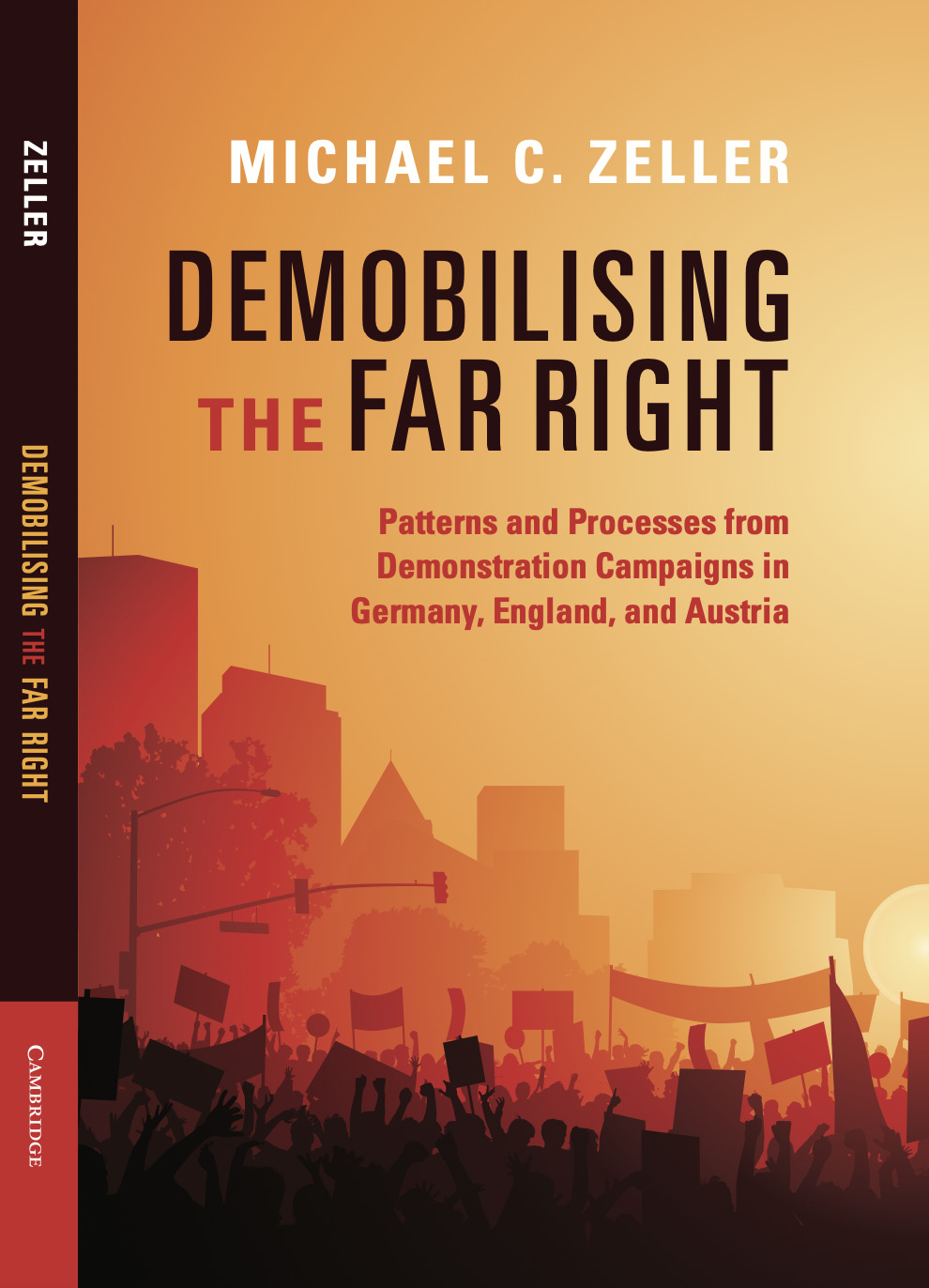
I study political violence and far-right socio-politics, as well as collaborating with colleagues on other topics within the area of comparative politics. My research applies a diverse array of methodological techniques, especially qualitative methods such as qualitative comparative analysis (QCA) and case study designs. My 2026 book, Demobilising the Far Right (published by Cambridge University Press: https://doi.org/10.1017/9781009720748), examines opposition to far-right demonstration campaigns and what causes those campaigns to end. From 2023-2025 I was a co-Principal Investigator on the European Commission-funded 'European Violent Right-Wing Extremism Monitoring' (EVREM) project. I am a member of the Radicalisation Awareness Network Policy Support (RAN PS), the European Research Community on Radicalisation (ERCOR) Researchers’ Directory.
Kontakt
Geschwister-Scholl-Institut für Politikwissenschaft (GSI)
Lehrstuhl für Vergleichende Politikwissenschaft
Oettingenstr. 67
80538 München
Raum:
H 105
Telefon:
089 / 2180-9068
E-Mail:
Michael.Zeller@gsi.uni-muenchen.de
Website:
https://michaelzeller.de/
Weitere Informationen
Im von Cambridge University Press herausgegebene Buch Demobilising the Far Right: Patterns and Processes from Demonstration Campaigns in Germany, England, and Austria untersucht Michael Zeller die Dynamik von Mobilisierung, Gegenmobilisierung und staatlicher Kontrolle und bietet eine neue vergleichende Studie zu rechtsextremen Demonstrationskampagnen in Österreich, England und Deutschland von 1990 bis 2020 an. Mithilfe einer fundierten qualitativen Vergleichsanalyse (QCA) und Fallstudien werden in dem Buch die Faktoren, die die Demobilisierung rechtsextremer Bewegungen vorantreiben, sowie die entscheidende Rolle staatlicher und gesellschaftlicher Reaktionen erforscht. Durch die Untersuchung wichtiger rechtsextremer Gruppen wie der British National Party und der Deutschen Volksunion beleuchtet es ein zentrales, aber bisher wenig erforschtes Gebiet der Theorie sozialer Bewegungen. Die Kombination aus innovativer Methodik und umfassender empirischer Analyse liefert wichtige Erkenntnisse zum Verständnis politischer Gewalt, Extremismus und Protestbewegungen sowie über die Reaktionen von Staaten und gesellschaftlichen Akteuren und deren Auswirkungen auf demokratische Gesellschaften.